Gluck: The Artist and the Frame
Born Hannah Gluckstein on 13 August 1895 in London, Gluck was a painter renowned for their striking portraiture and delicate floral still lifes. Known exclusively by the mononym Gluck, the artist has become an important figure in discussions of gender non-conformity and identity. Gluck’s unapologetic stance on self-expression and individuality continues to inspire new generations, marking them as a pioneer in both art and identity. As the Financial Times wrote about the artist on the occasion of her 1973 exhibition at the Fine Art Society “Gluck is a remarkable personality and her paintings are remarkable too.” Fig. 1.


Above: Cottage with Cat Gluck 1895 - 1978, images fo the framed work in an original Gluck frame - front and back pictured: sotherbys.com

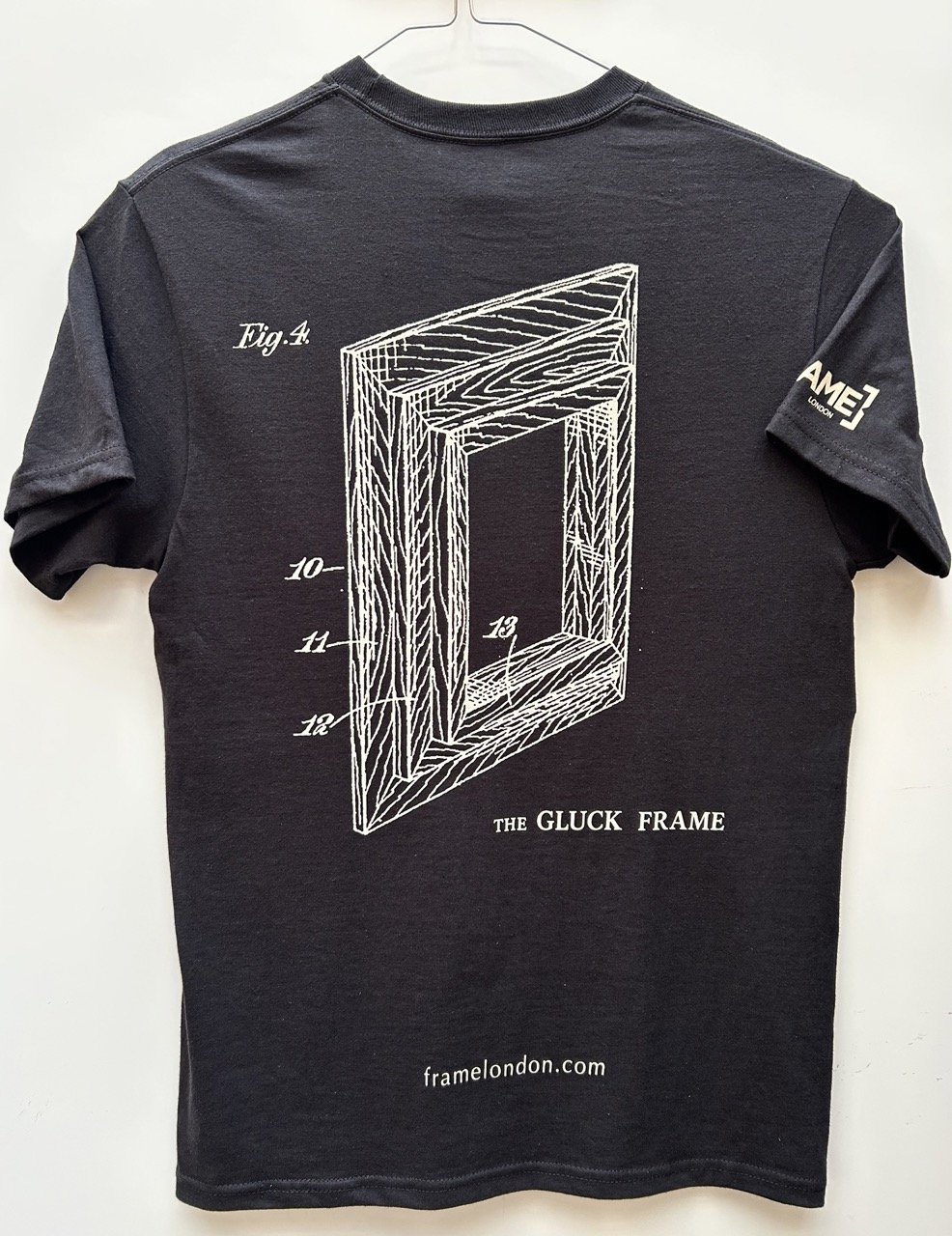
Fig 4. Image from the original patent of the Gluck Frame
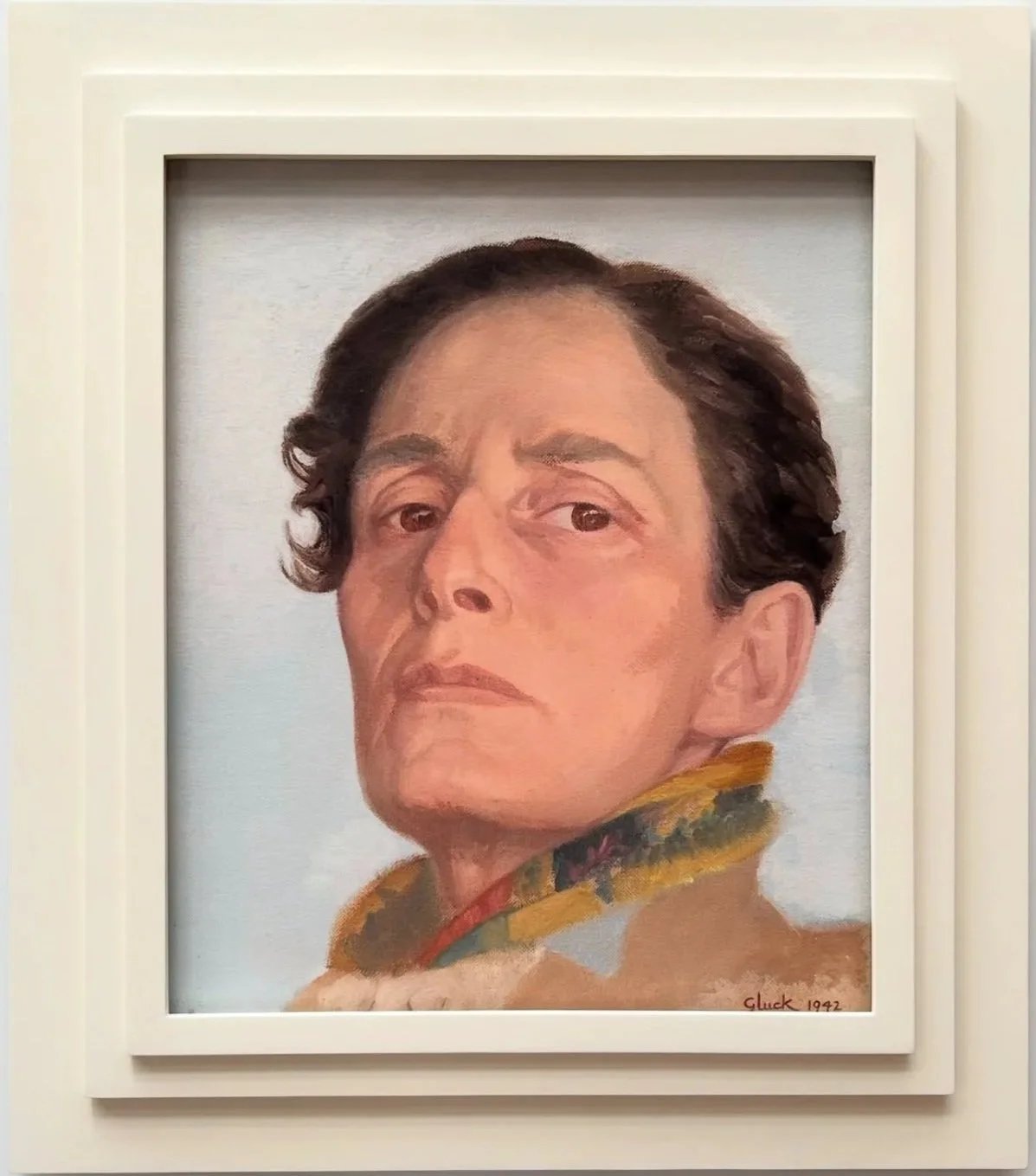
In the early 1930s, Gluck made a groundbreaking contribution to the presentation of art with the invention and patenting of the “Gluck frame.” This innovative design featured three ascending tiers that projected seamlessly from the wall, each one slightly smaller than the last. The frame, mount, and painting were unified into a single architectural form—often painted or papered to match the surrounding wall—creating a striking visual continuity that blurred the line between artwork and environment.
The Gluck frame was described in Jacob Simon’s The Art of the Picture Frame (1996):
“The essential feature of the Gluck frame,” according to a note in the catalogue of Gluck’s 1937 Fine Art Society exhibition, “is that it becomes part of any wall whatever its character, colour or period… It can be painted the same colour as the wall, or covered with the same wall-paper, or made in any wall material.” (Fig. 2)
As noted in the Insight article on Gluck’s work,
“The visual intensity of Gluck’s paintings is further heightened by uniquely distinctive frames. The stepped format, finished with a glistening layer of white paint and entirely free of mouldings, begs an important question about the nature of the artist’s naturalistic style.” (Fig. 3)
Through this innovative approach, Gluck redefined the relationship between art and its surroundings—transforming the frame from a boundary into an integral part of the artwork itself.

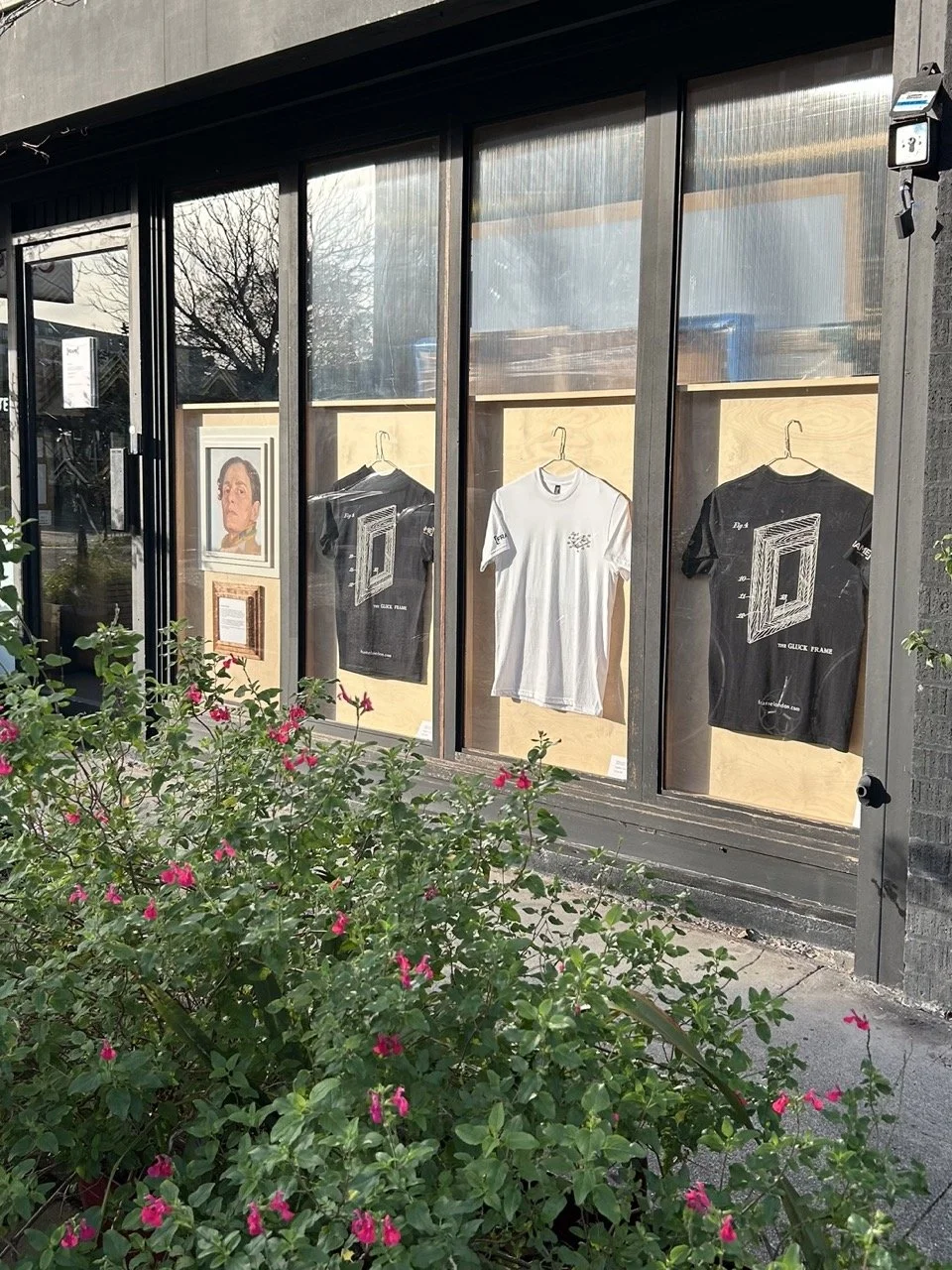
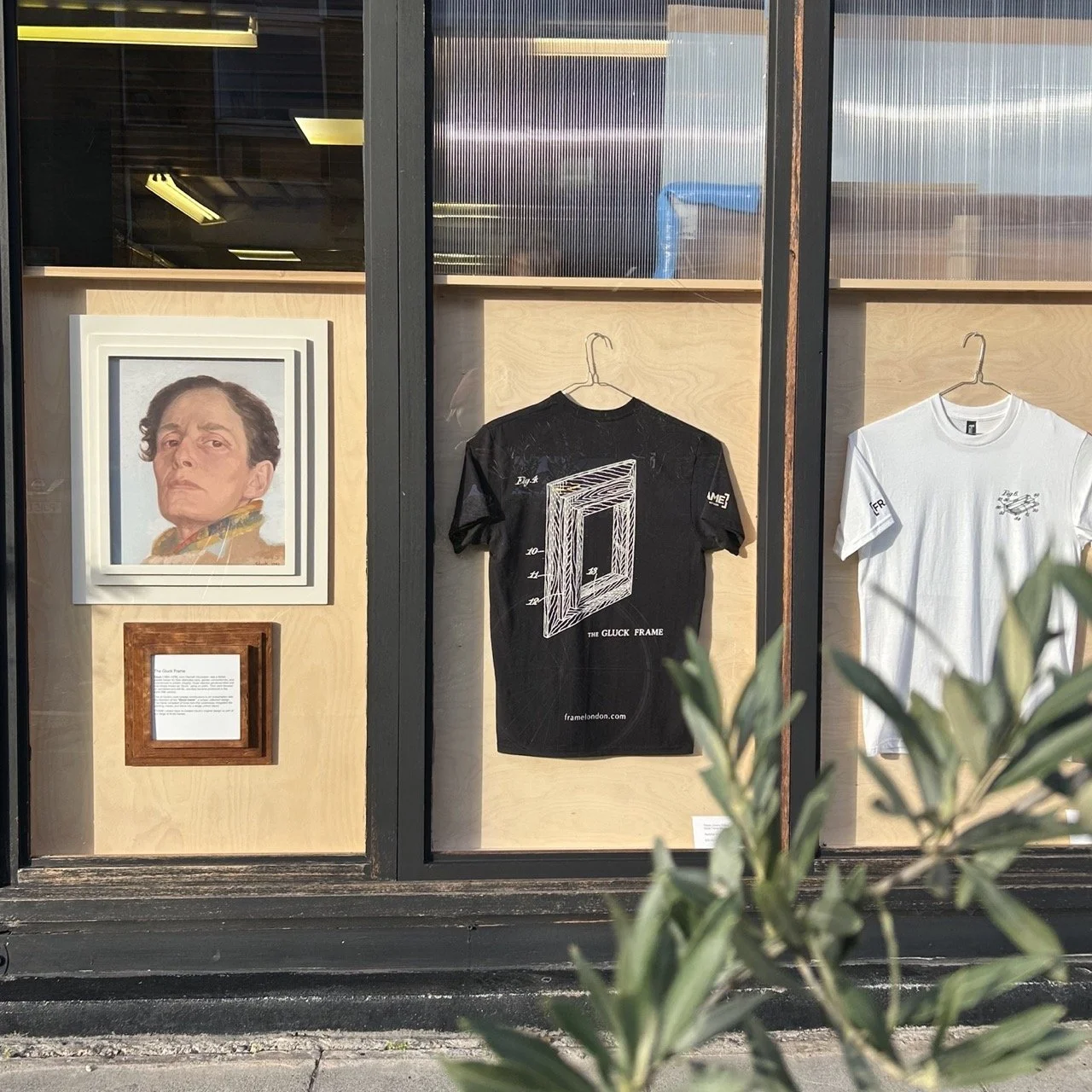
At Frame London, we’ve faithfully recreated the original Gluck frame to the artist’s precise specifications as part of our Artist Range. Inspired by Gluck’s visionary approach to integrating art and architecture, we’ve also designed a limited-edition T-shirt celebrating their legacy and their radical reimagining of how artwork and its frame can become one.
Now available online and in-store, these shirts proudly feature in our London shop window — a tribute to non-conformity, innovation, and the art of the frame. These are values that shaped Gluck’s influence and continue to define our practice today.
Beyond Gluck, the Artist Range also includes historically significant artist-designed frames, such as those created for Henry Moore and Albert York, alongside contemporary collaborations with leading artists including Enrico David, Donna Huddleston, Tim Walker, and others. Each frame in the collection reflects our ongoing commitment to craftsmanship, creativity, and the dialogue between art and its presentation.
Learn more on our Artist Range page here, and for further reading about the artist Gluck, sources as follows:
Sotherby’s Article: Gluck at The Fine Art Society By Francesca Wade
Piano Nobile Article: Insight no. 84 Gluck Cottage with a Cat
My Daily Art Display: Gluck, Fine Art Society Exhibitions 1932-1937
The Frame Blog: Gluck Frame