
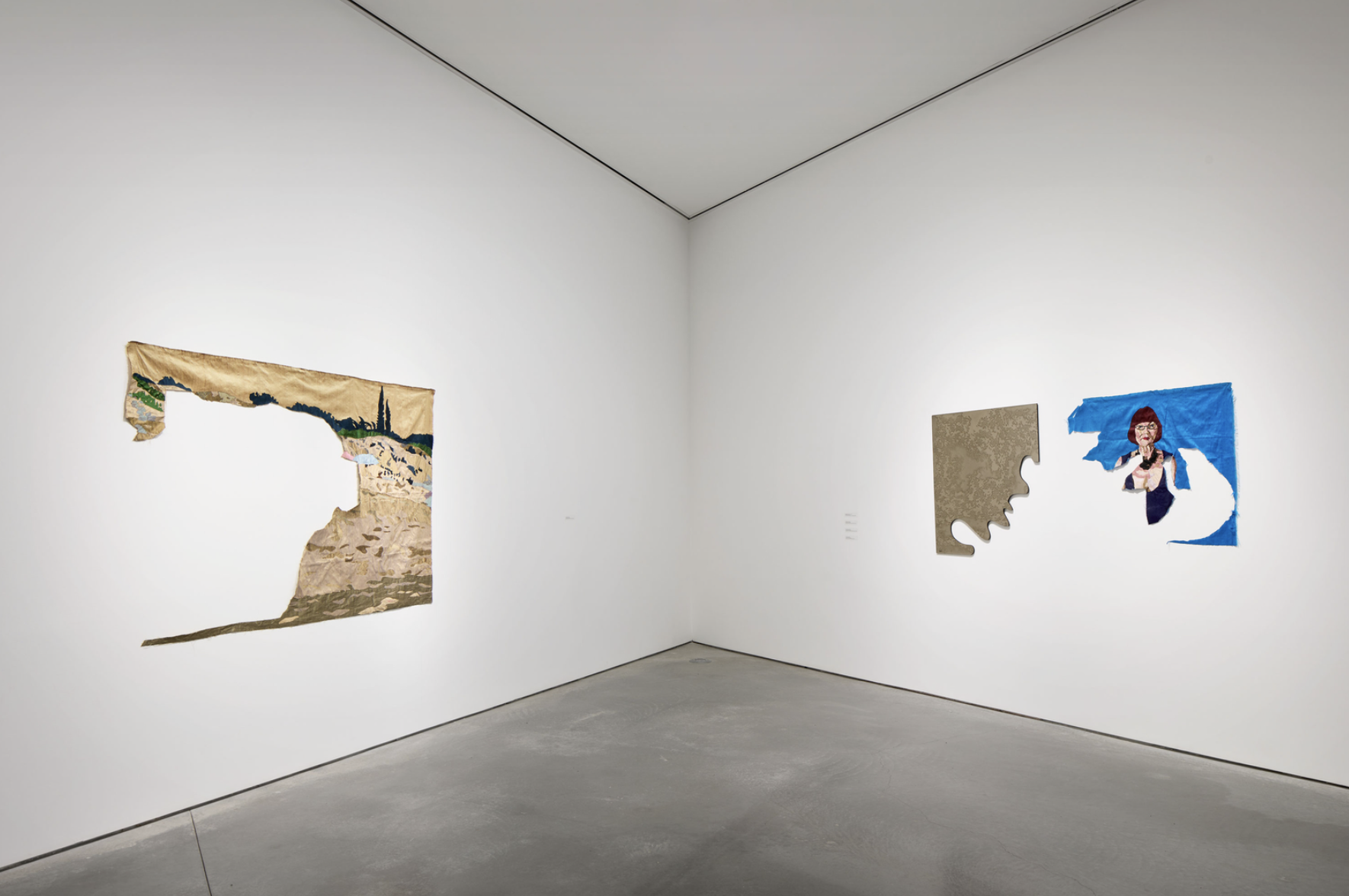
Billie Zangewa: Field of Dreams Installation view: SITE SANTA FE, New Mexico November 17, 2023–February 12, 2024 Photo by Byron Flesher
Fabric works are often displayed and presented in different ways, depending on the artists preference or intention. However, after a show often the works will need to be framed in order to preserve and protect them. How can we do this with minimal change to how the work is presented and without altering the artists intended presentation?
Conservation mounting of textile art requires a highly skilled, thoughtful approach—especially when working with complex and delicate fabric pieces like this brilliantly intricate work by artist Billie Zangewa, known for her layered, hand-stitched silk compositions.
From stitch selection to final presentation, every step plays a role in preserving the artwork’s integrity while ensuring it can be safely displayed.
What Is Conservation Mounting?
Conservation mounting is the process of securing an artwork using reversible, non-invasive methods that protect it from damage over time. In textile conservation, this typically involves hand-sewing techniques rather than adhesives, allowing the work to be safely removed or adjusted in the future.
Key principles include:
Minimal intervention
Reversibility
Material compatibility
Long-term preservation
Sewing Techniques for Complex Textile Works
When mounting complex fabric artworks, sewing is the preferred method because it provides controlled, flexible support, which can be easily reversed and removed.
1. Hand-Sewing for Stability
Carefully placed stitches ensure the textile is supported without strain and help distribute weight evenly across the surface.
2. Managing Tension and Weight
Layered or mixed-fabric works often respond differently to gravity and environmental changes. Strategic stitching prevents:
Distortion
Sagging
Stress on delicate areas
The goal is to allow the textile to sit naturally while remaining secure.
3. Using Conservation-Grade Materials
Only archival-quality threads and inert support fabrics should be used. These materials:
Prevent chemical degradation
Reduce long-term stress
Ensure compatibility with the artwork
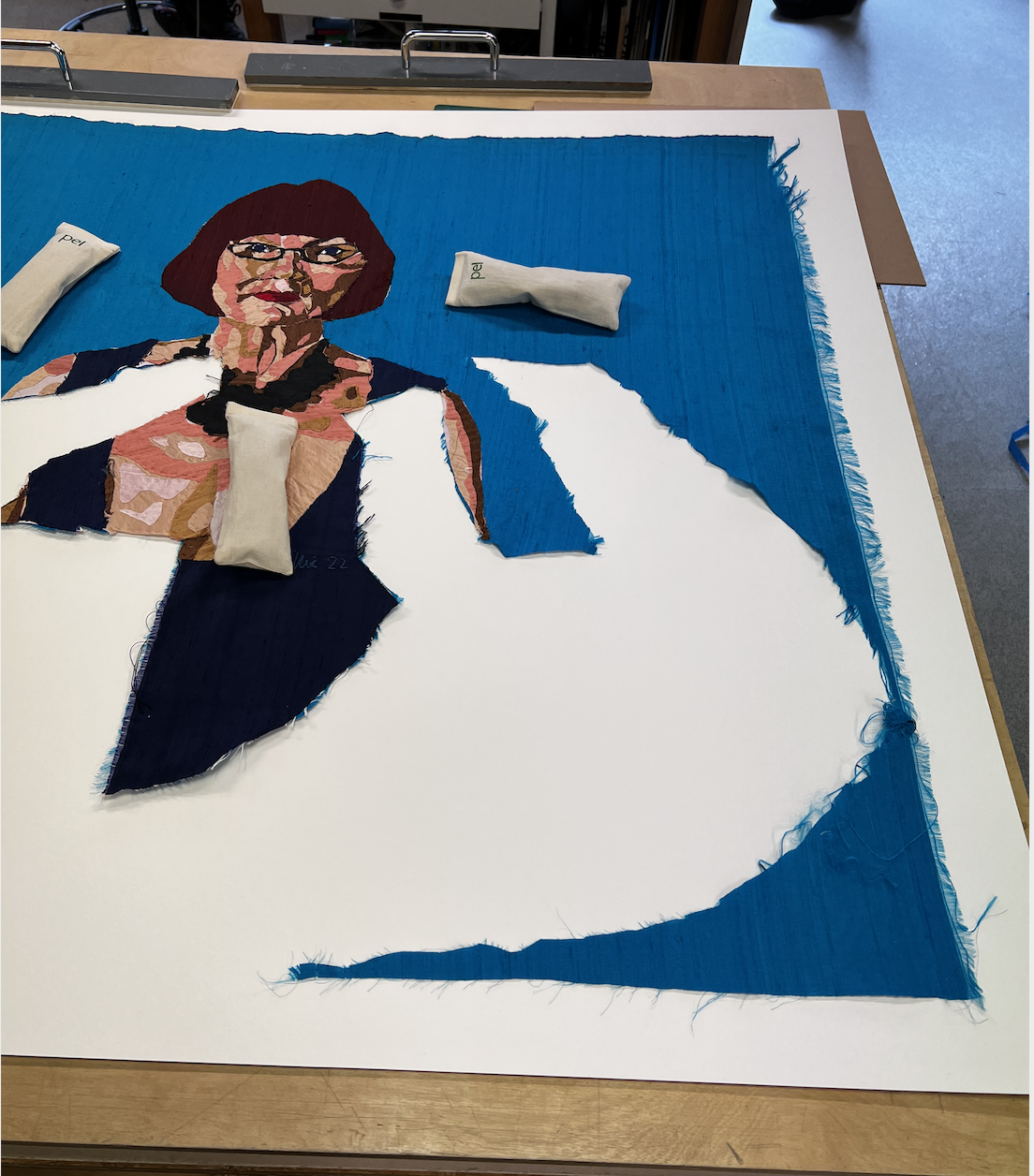
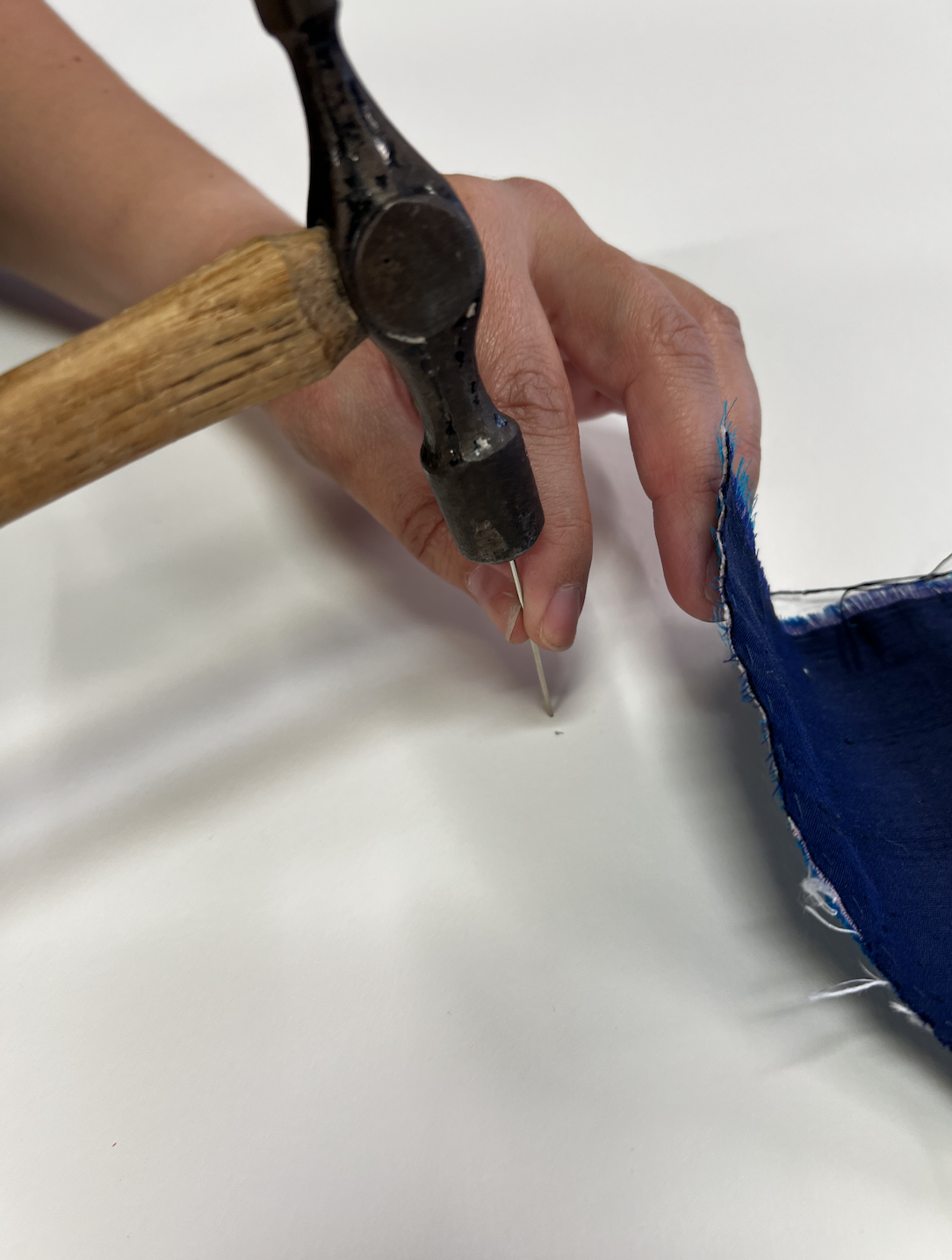
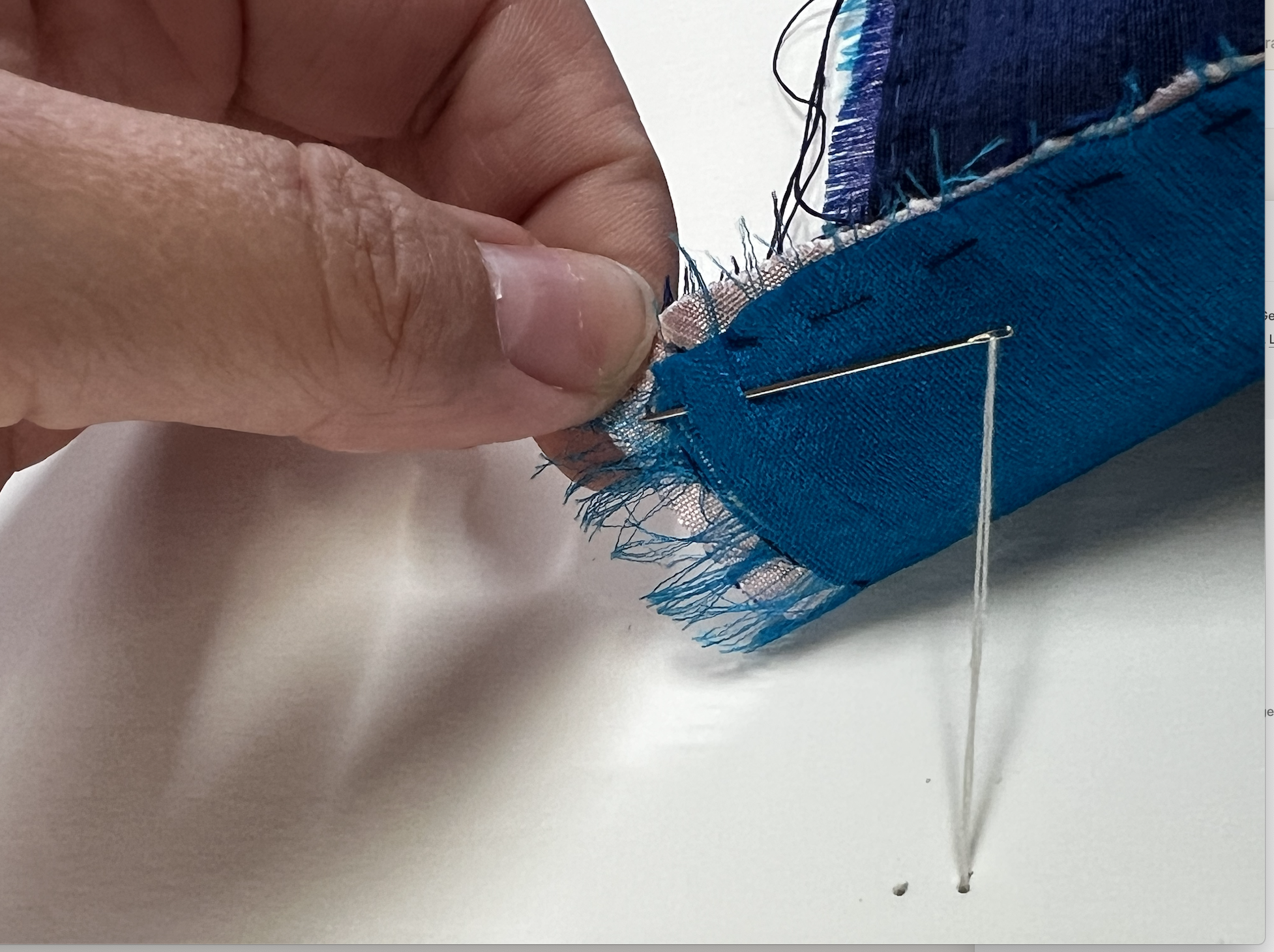
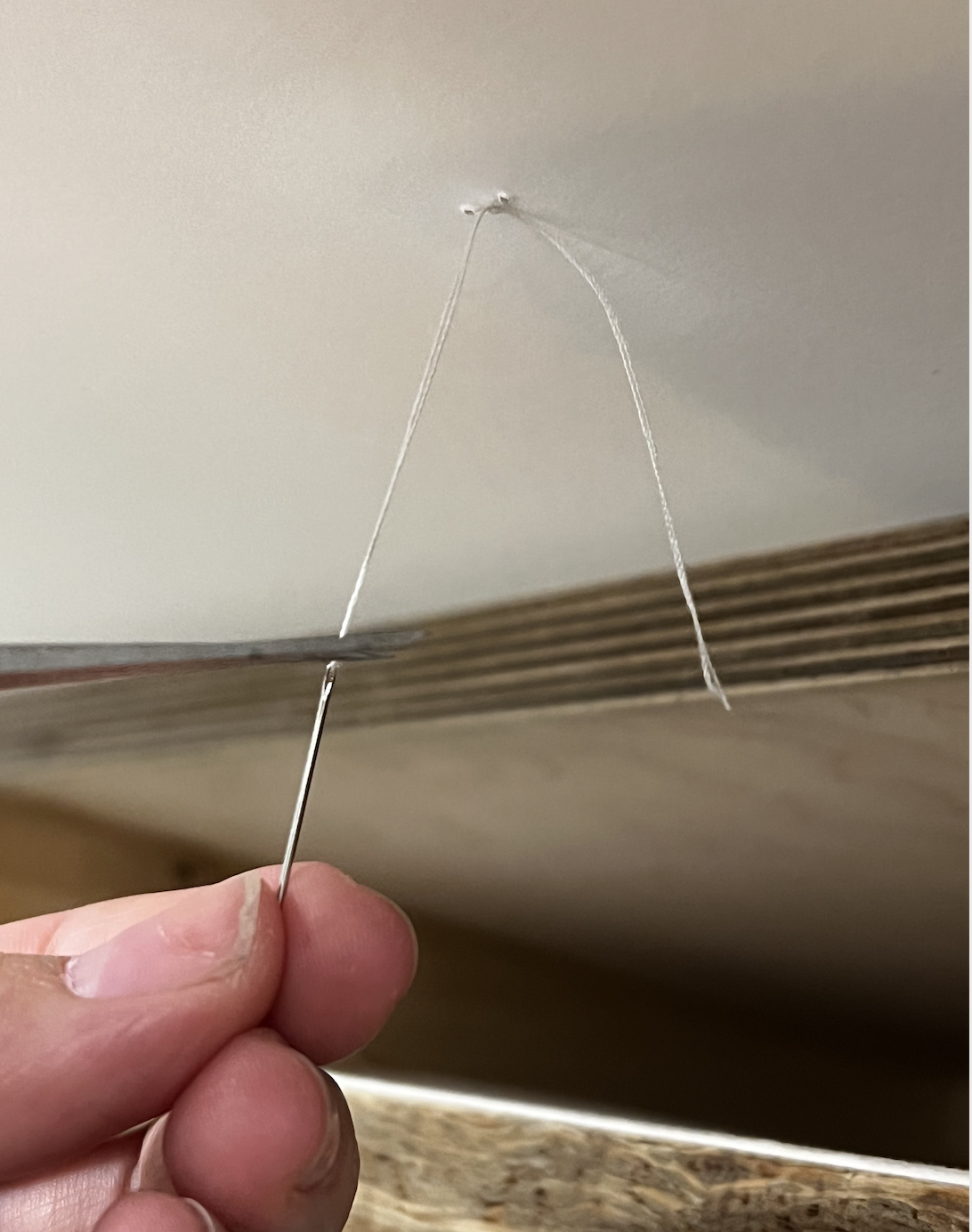
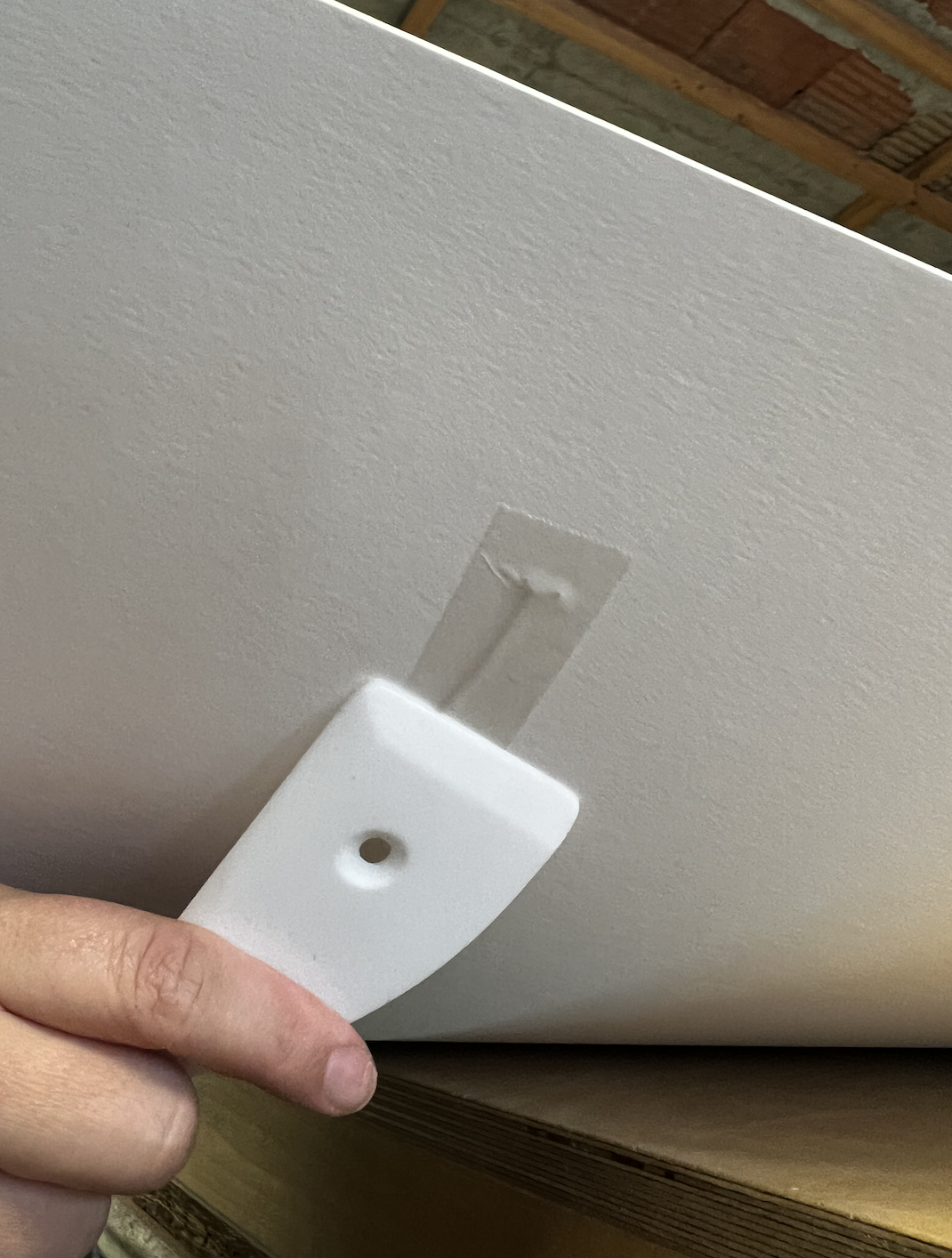
Here the process is illustrated in images.
The textile is laid out as intended and held in place by weights.
The holes for the stiches are planned out and then made using a hammer and needle.
The fabric is carefully sewn in place - making use of existing holes or backing pieces as much as possible so as not to interfere with the art itself.
Each stitch is knotted in place
Acid-free tape secures the stiches in place
Mounting and Presentation Best Practices
Effective textile mounting is not just about preservation—it also enhances how the artwork is experienced. Supporting Without Restricting: a well-mounted textile should retain its dimensionality and movement. Avoid flattening or over-tensioning the fabric, especially in works with layered or sculptural qualities.
Invisible but Effective Support: the mounting system should be visually unobtrusive, allowing the viewer to focus on the artwork rather than the method of display.
Stable Backing and Framing: use archival backboards and supports that provide structure without introducing harmful materials. Proper mounting reduces exposure to:
Environmental fluctuations
Physical handling damage
Long-term wear
Why Conservation Mounting Matters
Textile artworks are inherently fragile. Without proper mounting, they are vulnerable to distortion, fibre damage, and deterioration over time.
By following best practices in textile conservation and mounting, you ensure that:
The artist’s intent is preserved
The material integrity remains intact
The work can be safely displayed for years to come
Final Thoughts
Conservation mounting is a balance of technical precision and respect for the artwork. In complex textile works—like those inspired by Billie Zangewa—every stitch contributes to both preservation and presentation.
By using reversible sewing techniques, conservation-grade materials, and thoughtful mounting strategies, textile artworks can be protected while still fully expressing their narrative, texture, and craftsmanship.