Mounting
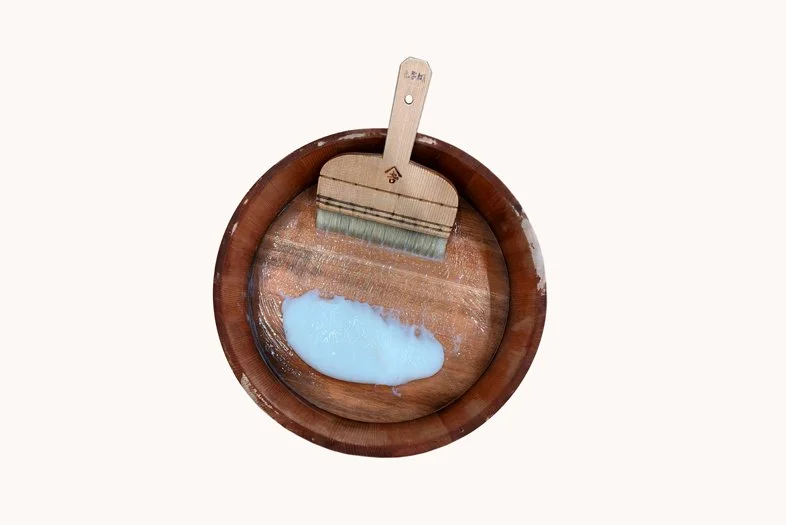
Central to our commitment to conservation framing is our use of fully reversible mounting methods. We specialise in traditional Japanese hinging, using wheat starch paste made in-house each week by our mounters. This allows artworks to be safely removed in the future without damage, preserving their originality.
Our team offers tailored advice on the most suitable mounting approach for each piece, considering its medium, condition, and display, to achieve the best visual result while adhering to conservation standards.
Below you’ll find a selection of examples demonstrating these techniques. If you have any questions or would like guidance on your own artwork, please don’t hesitate to get in touch.
We offer a wide range of mounting techniques, including:
-
A classic and protective presentation method which sandwiches the paper with a cut out window that keeps the artwork safely distanced from the glazing
-
Ideal for showcasing deckled edges or full sheet visibility, giving a sense of depth - the paper floats directly on the surface of the mount board hinged with Japanese washi paper tabs.
A raised float is where the floated artwork is raised on board floating above the surface of the mount board
-
A float mount, displayed within a window mount for extra space and to see the paper edges.
-
Perfect for presenting a series of works within a single frame
-
Each object needs a bespoke solutions for displaying objects, textiles, and sculptural pieces securely and elegantly
-
Dry mounting is a permanent process in which the artwork is bonded to a backing board using heat-activated adhesive, resulting in a perfectly flat, stable finish suited to prints and non-collectable works.