
How to Stretch a Canvas
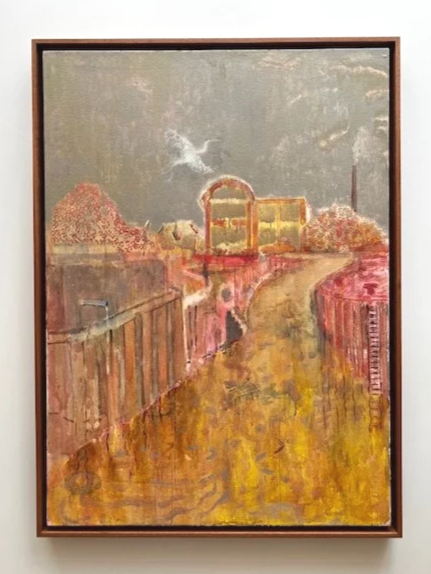
Andrew Cranson - Partick Heron, 2023, Karma
Stretching a canvas is a fundamental process in preparing artwork for display. Whether you are an artist preparing a painting for exhibition, a gallery handling loose canvas works, or a collector restoring a piece, understanding how to stretch canvas properly ensures the artwork remains stable, protected and beautifully presented.
In this guide we explain what canvas stretching is, why it matters, and the step-by-step process professionals use to achieve a perfectly tensioned surface.
What Is Canvas Stretching?
Canvas stretching is the process of mounting canvas fabric onto a wooden stretcher frame so that the surface becomes taut and structurally stable.
The canvas is pulled evenly across the frame and secured using staples or tacks. When done correctly, the canvas surface becomes smooth, firm and ready for painting, framing or display.
Artists may work on pre-stretched canvas, or they may paint on loose canvas first and stretch it afterwards.
Why Proper Canvas Stretching Matters
Correctly stretching a canvas is essential for both the appearance and longevity of the artwork.
A well-stretched canvas helps to:
Prevent sagging or warping over time
Protect the paint layer from cracking or stress
Ensure the artwork sits properly within a frame
Maintain structural stability during transport and display
Preserve the original tension and surface of the painting
Poor stretching can lead to ripples, distortion or long-term conservation issues, especially for large artworks.
Tools and Materials Needed to Stretch a Canvas
Professional framers and artists typically use the following tools when stretching a canvas:
Stretcher bars – wooden frame pieces that interlock to form the support
Canvas fabric – usually cotton duck or linen
Staple gun – to secure the canvas
Canvas pliers – used to grip and tension the canvas
Scissors or cutting knife (if stretching a blank canvas)
A clean flat work surface
High-quality stretcher bars and materials help ensure the canvas remains stable over time.
Step-by-Step Guide: How to Stretch a Canvas
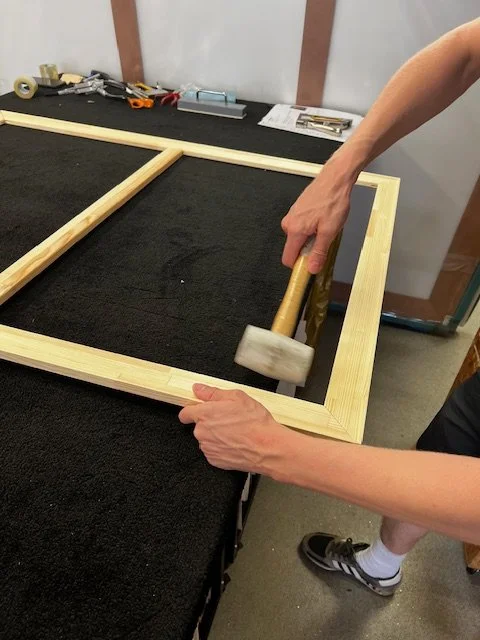
1. Assemble the Stretcher Frame
Begin by joining the stretcher bars together to form the wooden frame.
Check that the frame is square and properly aligned, as any distortion will affect the finished artwork. To do this measure both diagonals from corner to corner, and adjust by tapping the bars as necessary.
2. Cut the Canvas to Size (if stretching a blank canvas ready for painting) or - if stretching a painted canvas - place the artwork in position.
Lay the canvas face down on a clean surface and place the stretcher frame on top. Lift the edges of the painting up in each corner to make sure the painting is positioned correctly under the stretcher.
Leave approximately 5–8 cm (2–3 inches) of extra canvas on each side to allow enough material for pulling and stapling.
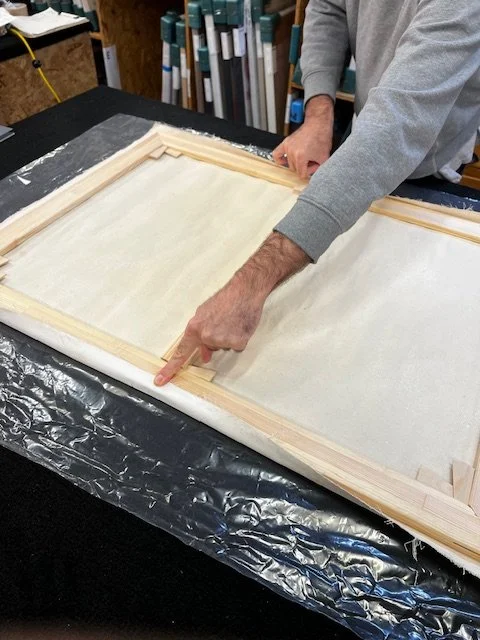
3. Staple the Centre Points First
Start stretching by stapling the centre of the longer side of the frame.
Then pull the canvas across to the opposite side and staple the centre again. Repeat for the remaining two sides.
This creates balanced anchor points that keep the tension even. The position of the staple should be closer to the edge of the fabric and further away from the painting.
4. Work Outward From the Centre
Continue stapling from the centre toward the corners, alternating sides as you go.
Use canvas pliers to pull the material firmly so the tension is evenly distributed across the frame.
The canvas should become tight and smooth with no visible ripples.
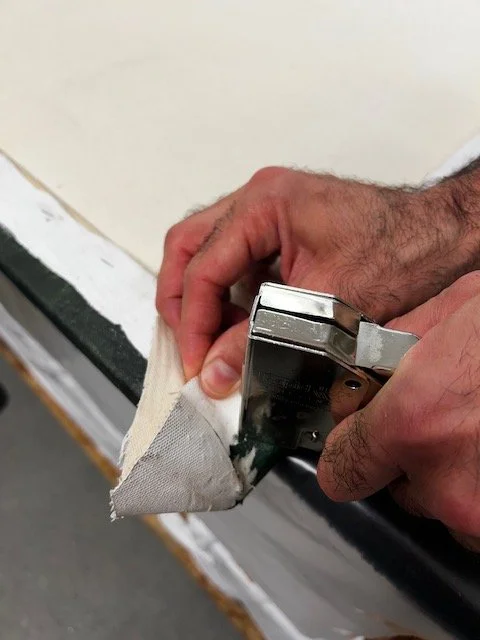
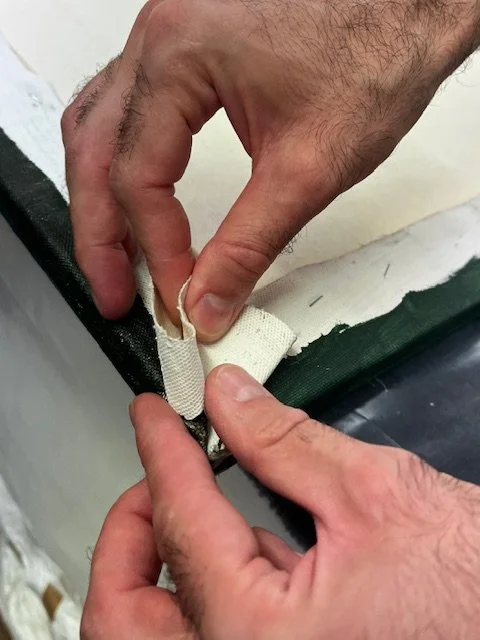
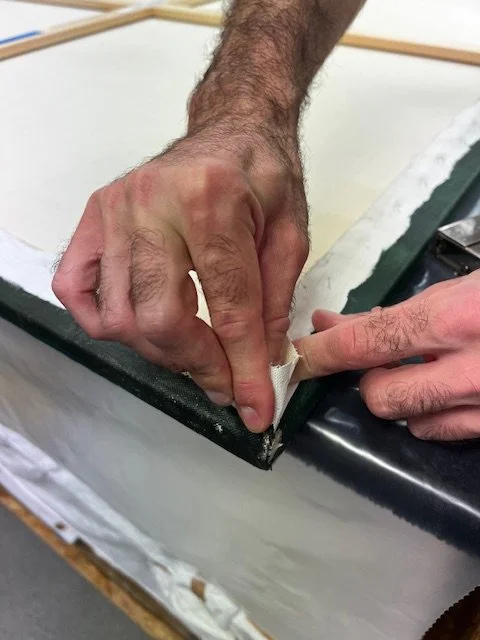
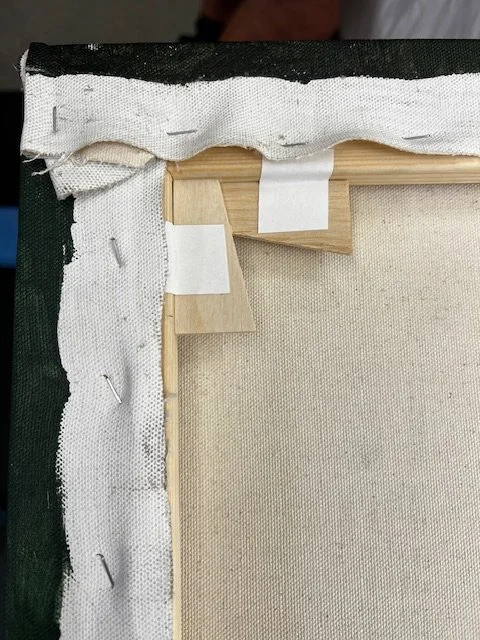
5. Fold and Secure the Corners
When you reach the corners, fold the excess canvas neatly and staple it in place.
Clean corner folds are important if the artwork will later be framed or displayed with visible edges.


6. Adjust the Canvas Tension
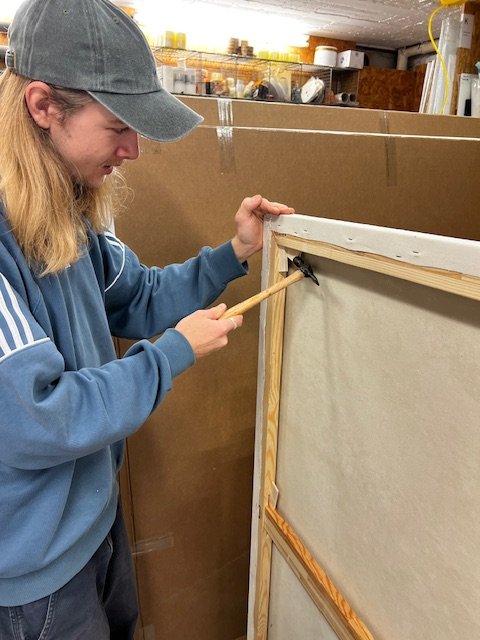
After stapling is complete, gently tap the wooden corner keys to slightly expand the frame and tighten the canvas further. These should be secured in place with small tabs of Nitto tape. Otherwise they could fall out in transit and land between the stretcher bar and the canvas, creating a dent in the painting.
A properly stretched canvas should feel tight and drum-like when lightly tapped.
Common Canvas Stretching Mistakes to Avoid
Even experienced artists can run into issues when stretching canvas. Some common mistakes include:
Pulling the canvas unevenly
Over-stretching the material
Stapling too close to the frame edge
Forgetting to check the frame is square
Leaving insufficient canvas margin
Taking time during the stretching process ensures a professional finish and long-term stability.
When Should You Use a Professional Framer?
While many artists stretch their own canvases, professional framers are often needed for:
Large artworks
Delicate or historic paintings
Gallery or museum presentation
High-value artworks requiring conservation care
Professional framing studios have specialist tools and experience to stretch canvases safely while preserving the integrity of the artwork.
Stretching a canvas correctly is an essential part of preparing artwork for display. Proper technique ensures the canvas remains stable, visually clean and structurally sound for many years.
FAQ: Canvas Stretching
How tight should a stretched canvas be?
A properly stretched canvas should feel firm and produce a slight drum sound when tapped lightly.
Can a loose canvas be re-stretched?
Yes. Professional framers often remove and re-stretch older canvases to restore proper tension.
What is the difference between stretcher bars and a frame?
Stretcher bars form the structural support for the canvas, while a frame is the decorative outer structure used for display.
If you’d like to know more, check out our instagram posts on this process, and look out for our follow up post: How to frame a Stretched Canvas, coming soon!